Friday 29th May 2026
The advice that earns trust is never given in calm markets
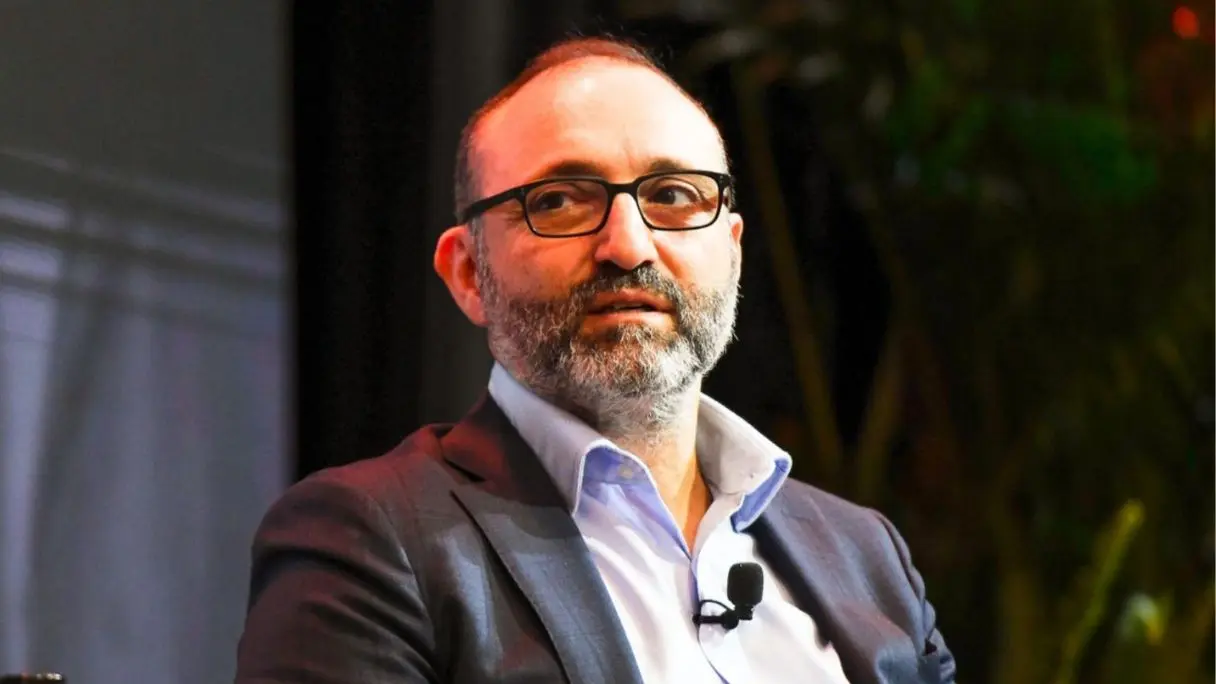
Viola Private Wealth's Charlie Viola says the principles of good advice have not changed in more than two decades. What has changed is the toolkit available to implement them, and the opportunity to invest clients like institutions regardless of portfolio size.
Charlie Viola has been giving financial advice for 25 years. Across a career that has taken him through the dot-com crash, the GFC, COVID and more recently a period of market volatility driven by geopolitical disruption and AI-fuelled uncertainty, his conclusion is not complicated.
Viola, founder and executive chair of Viola Private Wealth, which manages around $3.5 billion for approximately 200 high-net-worth and ultra-high-net-worth clients, cuts through the noise of the more technical portfolio construction conversation in a way that stays with most advisers long after the room has cleared.
“Over 25 years I have worked out that every client is different, but every client wants the exact same thing,” he says. “Don’t blow up their capital, have it generate income, grow over time so it protects the buying power over time and creates a legacy.”
Diversification is not a strategy. It is a discipline
Viola roots his approach in the first principles he learned when he began in advice. Keep powder dry, stay positioned to take advantage of opportunities when they arise, and apply that discipline consistently regardless of portfolio size.
The logic has never changed, and it holds whether the client has two million dollars or one hundred million.
What has changed is the toolkit. The buckets that once required institutional scale are now accessible to clients with one to three million dollars. Private equity, venture capital, real assets, infrastructure, all of it has been democratised.
Viola sees this as one of the most significant shifts in his career. One that most advice practices are still underutilising.
“Anyone should be taking exposure to those types of assets because ultimately every client we take on has got a long-term horizon,” he says. “Even if you take the client on when they’re 62, four minutes from retirement, their time horizon is 30 years plus.”
The argument for keeping clients in a simple mix of Australian shares and fixed income has never been weaker. The tools to build genuinely diversified, institutionally structured portfolios now exist at the private wealth level. The question remains whether advisers are using them.
Client communication in market volatility
If there is one piece of advice Viola would give every adviser, it is this: when markets fall, do not retreat. Triple your communication frequency instead.
“The hardest you will ever work for a client is during two periods. One, when you first go on. But most importantly, it is during periods of dissipation and weakness and market volatility. That is the point not to hide. That is the point to up the communication to three times what it was previously.”
The GFC was the lesson that shaped this view. Viola describes it as death by a thousand cuts. Markets falling relentlessly, the news getting worse by the week and no clear end in sight.
The ultimate test of client communication in market volatility is staying close through that period. The advisers who stayed close explained what was happening and why the portfolio was built to be resilient. Those relationships came out the other side stronger than before.
“What we learned is that the closer we stay with the clients, the more we align ourselves to their position and feel the pain with them, the more that trust will build,” he says. “And then you get rewarded for that trust over time when markets actually did do well.”
For younger advisers who did not work through the GFC, this is not a theoretical point. Markets have absorbed multiple shocks over the past 18 months without a major drawdown. Resilience can breed complacency.
The next downturn, whenever it comes, will separate the advisers who have built genuine relationships from those who have built transactional ones.
This is a humanities job, not a maths job
Viola’s clearest articulation of what advice is actually for cuts to the heart of the profession. Clients do not care about forward earnings estimates for NVIDIA. They care about whether the portfolio they have trusted an adviser to build will do what it is supposed to do.
“The level of revenue the portfolio is producing is going to value your bread, milk, rice, race cars, whatever it is that you do with your money over time,” he says. “And that is all we are trying to articulate. This is a humanities job. It is not a maths job.”
The advice market is increasingly crowded with technology platforms, model portfolios and low-cost passive solutions. For practices wondering how to differentiate, Viola’s answer is not a product or a process. It is a posture.
Know your client deeply, diversify their capital thoughtfully, communicate relentlessly when it is uncomfortable and speak to them like a human being who understands what their money actually means to their life.
Twenty-five years of market cycles, client crises and industry transformation have not changed that. At a time when almost everything in advice can be automated, replicated or commoditised, the adviser who shows up as a human being in the moments that matter most is the one clients never leave.

Laurence Parker-Brown is head of content at The Inside Network and managing editor of The Inside Adviser and Investor Strategy News.